Subscribe To


 Posts
All Comments
Posts
All Comments
Tuesday, 29 March 2011


Pushing Buttons Like the Jetsons

The galaxy is their home. Healthcare is a complete free market with extreme customer care. Technology was the best (but of course it still malfunctions, same as today). Business is rivalrous, prosperity is everywhere, and the state largely irrelevant except for the friendly policeman who shows up only every once in a while to check things out.
The whole scene — which anticipated so much of the technology we have today but, strangely, not email or texting — reflected the ethos of time: a love of progress and a vision of a future that stayed on course. Appropriately, it was the first show shown on ABC television in color instead of black and white. It was neither utopian nor dystopian. It was the best of life as we know it projected far into the future. People did not dress in uniforms or obey some dictator on a monitor in their homes. The people in the show were as fashion conscious as any American. Their food was not embedded in pill food. They had the equivalent of fast-food delivery services in their homes.
The message is a true one. Human nature and the structure of reality itself doesn't change. Only the gizmos we use change. We can become poorer or we can become richer. But the fundamental facts of how the world is built are immutable. Things are scarce but the possibilities for economic creation are infinite in a world of trade, boundaries, law, and private innovation.

Wow That Was Fast! Libyan Rebels Have Already Established A New Central Bank Of Libya
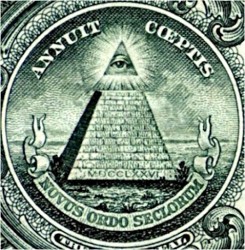
'The rebels in Libya are in the middle of a life or death civil war and Moammar Gadhafi is still in power and yet somehow the Libyan rebels have had enough time to establish a new Central Bank of Libya and form a new national oil company. Perhaps when this conflict is over those rebels can become time management consultants. They sure do get a lot done. What a skilled bunch of rebels - they can fight a war during the day and draw up a new central bank and a new national oil company at night without any outside help whatsoever. If only the rest of us were so versatile! But isn't forming a central bank something that could be done after the civil war is over? According to Bloomberg, the Transitional National Council has "designated the Central Bank of Benghazi as a monetary authority competent in monetary policies in Libya and the appointment of a governor to the Central Bank of Libya, with a temporary headquarters in Benghazi." Apparently someone felt that it was very important to get pesky matters such as control of the banks and control of the money supply out of the way even before a new government is formed.'
Obama Defends Libya Fight
President Says Massacre Prevented; Republicans Want Plan to Remove Gadhafi
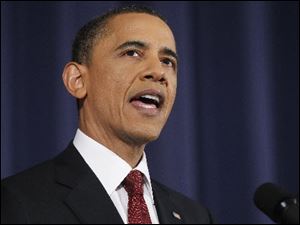
'President Barack Obama made his case for military intervention in Libya in a speech to the nation on Monday, saying the action he directed was in U.S. interests and had already succeeded in preventing a massacre of "horrific scale.''
He said the U.S. would work to remove Col. Moammar Gadhafi from power, but made clear that he would rely on political, financial and other pressures—not military force—to drive him out. That left open the central question of how Col. Gadhafi's removal would be accomplished, and how the U.S. would deal with Libya should he remain.More broadly, Mr. Obama set out the most detailed explanation to date of a new model for how the U.S. will approach international crises, laying out what may be seen as an Obama doctrine in which the U.S. acts as a coalition-builder, spreading the costs and burdens among nations'
Subscribe to:
Posts (Atom)